What Is Kefir Soda, and could it be a better fit for your daily routine?
Water kefir soda is a fermented drink made with water, sugar, and water kefir grains. These unusual-looking clusters contain communities of bacteria and yeasts that feed on some of the sugar during fermentation. The process creates a tangy flavor and can produce natural carbonation, giving the drink a gentle fizz.
Unlike traditional kombucha, which is made using sweetened tea, water kefir starts with a water-based mixture. That gives it a different flavor and makes it easy to experiment with ingredients such as strawberries, ginger, lemon, and lime. You can enjoy it alongside a fresh dessert, such as this easy Vibrant Lime Bars Recipe, for a bright combination of citrus flavors. But is water kefir actually better for your gut, or is it simply another wellness trend with clever marketing behind it? Let’s take a closer look.For years, kombucha has been one of the most talked-about drinks in the wellness world. You’ll find it in supermarkets, health food stores, and trendy cafés, often sitting on shelves with impressive labels promising a healthier lifestyle. But take a sip, and the sharp, fermented taste can be a little much if you’re not used to it. Some people love that tangy flavor. Others would rather drink it with Pumpkin Cake than almost anything else. And that’s perfectly fine. Eating and drinking well shouldn’t feel like a punishment, kombucha isn’t the only fermented drink worth exploring. Water kefir offers another option for people who enjoy a refreshing, slightly fizzy beverage but prefer something lighter and easier to customize.
Truth About Water Kefir Grains
The first thing that might put you off water kefir is the name. When someone mentions kefir grains, it’s easy to imagine wheat, barley, or some strange mixture of cereal sitting at the bottom of a jar. If you’re trying to avoid gluten or simply don’t like the idea of drinking something grain-based, the name probably doesn’t sound particularly appealing.
Here’s the good news: water kefir grains aren’t actual grains.
They’re small, soft, jelly-like clusters made up of microorganisms held together in a natural structure. Depending on the culture, they can look like translucent crystals, tiny pieces of sea glass, or little gelatinous beads.
There’s no field of wheat involved.
The bacteria and yeasts living in these clusters work together during fermentation. They use some of the sugar in the surrounding liquid and produce various compounds, including organic acids and carbon dioxide.
That carbon dioxide is what helps create the bubbles.
The grains can also be reused to make additional batches when they’re properly maintained. Instead of buying a new culture every time you want to prepare a fresh drink, you can continue using a healthy culture according to appropriate care instructions.
One important point, though: while water kefir is made without wheat or barley as ingredients, people with serious food allergies or medical dietary restrictions should still check the culture and preparation process carefully.
How Does Water Kefir Turn Into a Fizzy Drink?
You don’t need a complicated kitchen setup to begin making water kefir. The basic process involves water, sugar, a healthy culture, and a clean container.
First, the sugar is dissolved in water. Once the mixture reaches a suitable temperature, the water kefir grains are added. The container is then left for fermentation to take place.
Depending on the culture, temperature, and other conditions, the first fermentation may take around 24 to 48 hours. During that time, the microorganisms use some of the available sugar. As fermentation continues, the drink may become less sweet and develop a more noticeable tang.
Carbon dioxide can also form, contributing to the drink’s natural sparkle.
However, don’t assume that fermentation removes every trace of sugar. The amount remaining depends on several factors, including how much sugar was added, the activity of the culture, the temperature, and the length of fermentation.
That’s worth remembering if you’re monitoring your sugar intake.
Once the first fermentation is complete, the liquid is strained to separate it from the grains. You can then refrigerate the drink or add fruit and other flavorings.
Some people choose to carry out a second fermentation to develop more carbonation and flavor. If you try this, use bottles specifically designed to withstand pressure and monitor them carefully. Carbon dioxide can build up quickly in a sealed container.
The result is a drink you can adjust to your liking. Prefer something mildly sweet? You can experiment with fermentation time. Enjoy a sharper flavor? A slightly longer fermentation may produce a tangier result, although conditions vary.
Is Kefir Soda Better Than Kombucha?
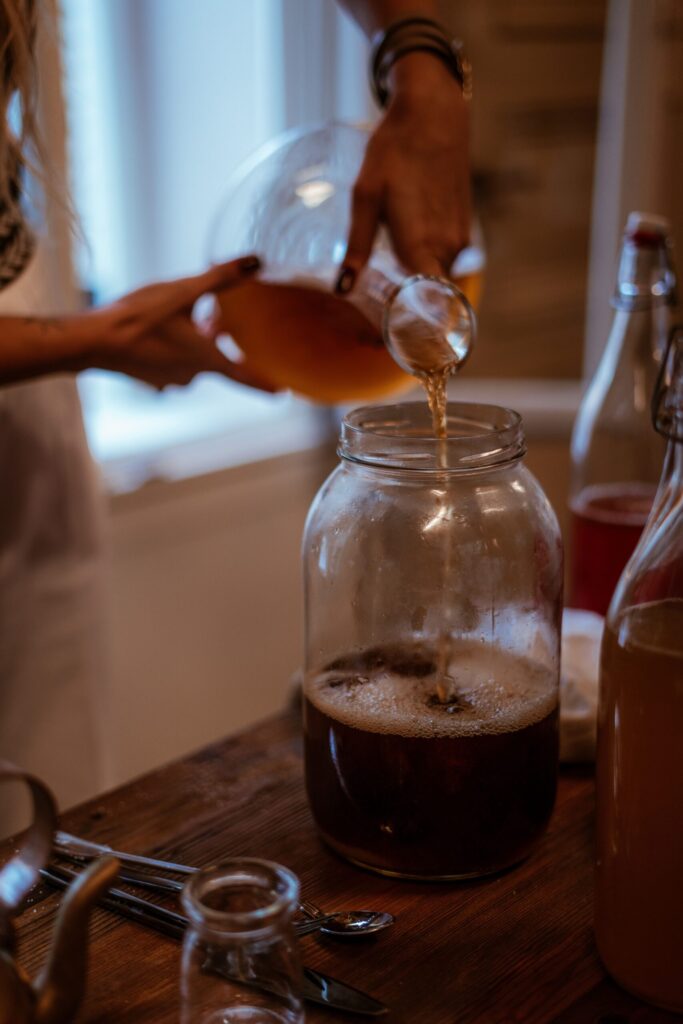
Kombuch
This is where things get interesting.
Both water kefir and kombucha are fermented beverages, and both can contain living microorganisms. But they’re made differently, taste different, and shouldn’t automatically be treated as interchangeable when it comes to health benefits.
Kombucha is traditionally prepared with sweetened tea and a culture of bacteria and yeasts. That tea base contributes to its characteristic flavor, which can become quite tart during fermentation.
Water kefir, on the other hand, uses water, sugar, and water kefir grains. Its flavor is generally lighter and often works particularly well with fresh fruit and citrus.
If you dislike kombucha’s sharp, tea-like taste, water kefir might be more enjoyable. If you love kombucha’s distinctive tang, you may prefer sticking with it. Neither option is automatically the healthier choice for everyone.
Fermented beverages can contain different microorganisms depending on how they’re made and processed. Some commercial products are heat-treated or filtered in ways that affect the presence of live cultures, so checking the label can help you understand what you’re buying.
There’s also an important distinction between containing live microorganisms and having a proven health benefit. Research into fermented foods and digestive health is continuing, but evidence supporting specific benefits from water kefir in humans remains limited.
In other words, enjoy the drink if you like it, but don’t expect it to fix every digestive problem.
Are Commercial Probiotic Sodas Worth the Money?
Walk through the drinks aisle at a supermarket and you’ll notice that probiotic sodas and other beverages marketed for gut health have become increasingly visible. Some contain added bacterial strains. Others include prebiotic ingredients, fruit juices, sweeteners, or flavorings. Their nutritional value can vary considerably from one product to another.
The word probiotic on a label doesn’t tell you everything you need to know.
Before buying a drink, check its ingredient list, sugar content, serving size, and any information about the cultures it contains. Some products may be suitable for your preferences, while others might contain ingredients you’d rather avoid.
Making water kefir at home gives you more control over what goes into your glass. You can experiment with flavors and decide how sweet or tangy you want the drink to be. It may also save money if you prepare it regularly, although you’ll need to account for the cost of the culture, sugar, fruit, and suitable bottles.
Still, homemade doesn’t automatically mean healthier, safer, or cheaper. Preparation methods and storage matter, and a homemade drink’s sugar content and microbial composition can be less predictable than those of a standardized commercial product. The real appeal of water kefir is its flexibility. You can make a batch that suits your taste instead of relying on whatever happens to be available on a store shelf.
Three Water Kefir Flavors You’ll Want to Try
Plain water kefir is a good starting point, but adding a little flavor can make it much more enjoyable.
Here are three combinations worth experimenting with.
1. Ginger and Lime for a Spicy Kick
If you enjoy drinks with a little bite, ginger and lime are an excellent pairing.
Fresh ginger brings a warm, spicy flavor, while lime adds a sharp citrus note. Together, they create a refreshing drink that feels particularly satisfying when served cold.
Add a little fresh ginger and lime juice to strained water kefir, then taste and adjust the quantities to your preference.
If you want additional carbonation, you may choose a second fermentation. Just remember that the extra fermentable sugar in any added ingredients can increase pressure inside a sealed bottle. Use pressure-rated bottles and monitor the process carefully.
2. Strawberry or Blueberry for a Fruity Finish
Not everyone wants a spicy or sharply tangy drink. If you prefer something fruitier, try strawberries or blueberries.
Lightly mash a few pieces of fruit to release their juice, then combine them with the strained kefir. The fruit brings its own flavor, color, and natural sweetness.
Strawberries give the drink a familiar summer-fruit taste, while blueberries can create a deeper color and a slightly different flavor profile.
You can adjust the quantity of fruit depending on how strong you want the taste to be.
Keep in mind that fruit contains sugar, and some of that sugar can ferment during a second fermentation. Monitor carbonation rather than leaving sealed bottles unattended.
3. Lemon and Lime for a Clean, Citrus Taste
Sometimes, there’s no need to complicate things.
A little lemon or lime juice can transform plain water kefir into a crisp, citrus-flavored drink. It’s an easy option for anyone who enjoys refreshing flavors without wanting a long list of ingredients. Start with a small amount of juice, stir it into the strained drink, and taste before adding more.
You can refrigerate the finished beverage and serve it cold. If you prefer a less tart flavor, adjust the amount of citrus rather than assuming the drink needs extra sugar. These combinations are flexible starting points, not strict recipes. Experiment gradually until you find the flavor you enjoy most.
Is Making Water Kefir Really That Easy?
One reason people become interested in water kefir is that it doesn’t usually require the long fermentation period associated with some other homemade fermented foods. Many batches can be ready for straining within a day or two, depending on the conditions.
Once you’re familiar with the routine, the hands-on work can be relatively brief. You prepare the sugar water, add the culture, allow fermentation to take place, and separate the grains when the batch is ready.
Of course, that doesn’t mean you can forget about it completely.
You’ll still need clean equipment, a suitable environment, and a way to recognize when something isn’t right. Temperature changes can affect how quickly fermentation progresses, so the clock alone shouldn’t be your only guide.
What about taking a break?
Water kefir grains may tolerate refrigeration when stored appropriately, but their condition can change during storage, and they may need time to become active again. Follow the care instructions for your particular culture instead of assuming every batch will respond in exactly the same way.
With a little experience, maintaining a culture can become a manageable kitchen routine rather than another demanding project.
Does Kefir Soda Actually Improve Gut Health?
Now we come to the question behind much of the interest in probiotic drinks.
What Is Kefir Soda from a gut-health perspective? It’s a fermented beverage that may contain live bacteria and yeasts, depending on how it’s prepared. That makes it interesting to people exploring fermented foods, but it doesn’t establish that drinking it will produce a particular health outcome.
The effects of microorganisms can vary by strain, dose, individual, and health condition. Findings from research on one probiotic product also cannot automatically be applied to every fermented beverage.
Water kefir may be an enjoyable addition to a varied diet, but current evidence doesn’t support presenting it as a guaranteed way to restore gut bacteria, cure bloating, or treat digestive disorders.
It’s also not a substitute for a balanced diet, adequate hydration, or medical advice when digestive symptoms persist.
If you have a weakened immune system or a condition that makes consuming foods containing live microorganisms potentially risky, speak with a healthcare professional before trying homemade fermented drinks.
The sensible approach is to treat water kefir as a beverage you may enjoy, not as a miracle treatment.
A Few Safety Tips Before You Start Fermenting
Home fermentation can be rewarding, but clean preparation and careful handling are essential.
- Use clean equipment. Wash containers and utensils thoroughly before preparing a batch.
- Start with a healthy culture. Obtain water kefir grains from a reliable source and follow the supplier’s care instructions.
- Watch for signs of spoilage. If you notice fuzzy mold, unusual discoloration, or other concerning changes, discard the batch.
- Be careful with carbonation. Use bottles designed for pressure and check them regularly during a second fermentation.
- Store the finished drink appropriately. Refrigeration helps slow further fermentation, although it doesn’t stop every process immediately.
- Remember that fermentation can produce alcohol. The amount varies with the recipe and conditions, so homemade water kefir should not be assumed to be alcohol-free.
If you’re unsure whether a batch is safe, it’s better to throw it away than take a risk.
What Is Kefir Soda, and Is It Worth Trying?
If you’ve been looking for an alternative to sugary soft drinks or simply want to explore fermented beverages, water kefir could be worth a try.
What is Kefir Soda in everyday terms? It’s a fizzy, fermented drink made from water, sugar, and water kefir grains. Its flavor can range from mildly sweet to tangy, and you can customize it with ingredients such as ginger, berries, lemon, and lime.
Its biggest selling point is versatility. You can experiment with different combinations, make it at home, and find a version that suits your taste. But it’s important to keep the health claims in perspective. Water kefir may contain live microorganisms, yet that alone doesn’t prove it will improve your gut health. Fermentation also doesn’t guarantee that all the sugar disappears, and homemade batches can vary considerably.If you enjoy the taste and prepare it carefully, it can be a pleasant addition to your beverage choices.
You don’t have to force yourself to drink something unpleasant just because it’s popular among wellness enthusiasts. And you don’t have to spend a fortune on brightly packaged soda to explore fermented drinks. Sometimes, the best choice is simply the one you enjoy, understand, and can prepare safely.
So, if a cold glass of ginger-lime fizz or homemade berry soda sounds more appealing than a bottle of sharply sour kombucha, water kefir might be worth adding to your kitchen experiments.