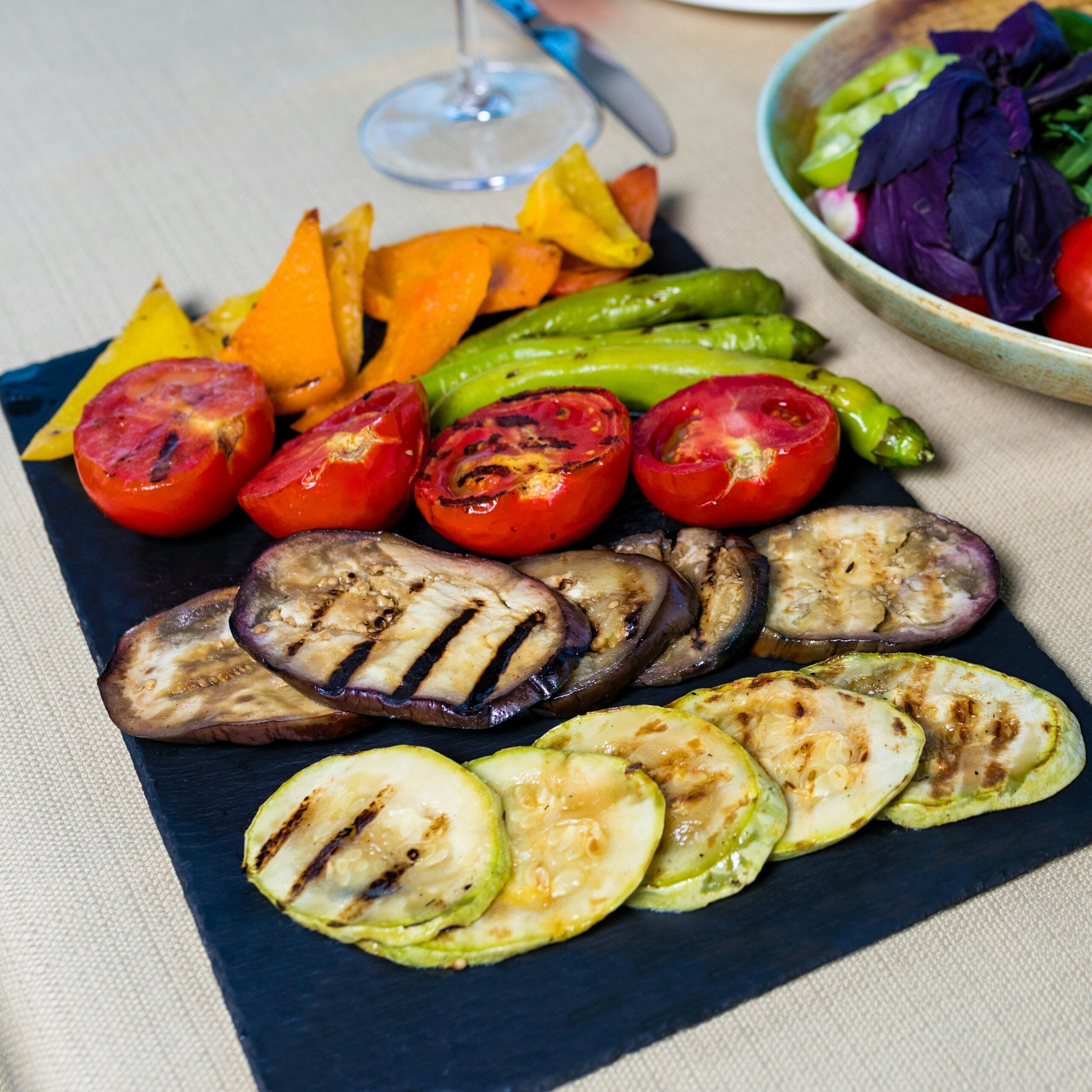
This easy grilled vegetable recipe brings a vibrant rainbow of colors and smoky, caramelized flavors to your table. By pairing a simple seasoning base with a bright post-grill herb dressing, you get perfectly tender vegetables without losing the herbs’ fresh punch.
Recipe Highlights
- Effortless Prep: It requires minimal preparation and only a handful of pantry staples.
- Crowd-Pleaser: The large batch size makes it a highly versatile side dish for cookouts, potlucks, or family dinners.
- Completely Customizable: You can easily swap in whatever seasonal vegetables you happen to have on hand.
Key Ingredients
The Vegetables
- Red Bell Peppers: Sweet and sturdy enough to hold their shape on the grill.
- Carrots: Sliced lengthwise to ensure they cook evenly while adding natural sweetness.
- Yellow Squash: Caramelizes beautifully (zucchini makes an excellent substitute).
- Broccoli: Large florets get wonderfully crispy on the edges while remaining tender inside.
- Eggplant: Becomes rich, creamy, and smoky; cut thick to prevent it from falling apart.
- Cabbage: Grilling coaxes out its natural sweetness and creates crisp, charred edges.
- Red Onion: Softens and caramelizes over the heat (yellow or sweet onions also work).
Note: You can also throw in Brussels sprouts, mushrooms, cauliflower, green beans, or asparagus. If using dense root vegetables like sweet potatoes, pre-cook them first to save your sanity and grill time.
Seasonings & Herb Dressing
- Extra-Virgin Olive Oil: Used both to coat the raw veggies and as the luxurious base for your dressing.
- Kosher Salt, Black Pepper, & Garlic Powder: Simplifies the process while highlighting natural flavors.
- Fresh Herbs (Dill, Mint, Chives): Creates a bright, summery contrast to the heavy smoke. You can substitute parsley, basil, thyme, cilantro, or green onions.
- Red Wine Vinegar & Fresh Lime Juice: Adds essential acidity to make the entire platter pop.
Step-by-Step Instructions
Step 1: Fire Up and Prep
Preheat your grill to 400°F and clean the grates to stop sticking in its tracks. Chop your vegetables and toss them thoroughly with olive oil, salt, and pepper. Let them rest for 15 minutes to allow the seasonings to penetrate.
Step 2: Whisk the Dressing
While the vegetables take a break, whisk together your olive oil, chopped fresh herbs, vinegar, lime juice, and a pinch of salt. Letting it sit gives the herbs time to infuse the oil beautifully.
Step 3: Hit the Grill
Place the vegetables directly onto the grill grates over medium-high heat to lock in those gorgeous grill marks. Most vegetables will need 5 to 8 minutes on the first side before they release easily. Flip and cook for another 5 to 8 minutes. Pull individual veggies off as they hit fork-tender perfection so nothing gets overcooked.
Step 4: Toss and Serve
Arrange your hot, smoky vegetables on a serving platter and immediately brush them with the fresh herb dressing. The residual heat helps the dressing sink into t he vegetables while keeping the herbs bright and vibrant.
Grill Times at a Glance (at 400°F)
Because different vegetables have different structural integrity, use this quick reference guide to manage your grill real estate:
Grilled Vegetable Cooking Guide
Carrots
- Total Cooking Time: 12–18 minutes
- Visual Cues: Fork-tender, browned edges
Bell Peppers
- Total Cooking Time: 10–15 minutes
- Visual Cues: Defined grill marks, softened
Cabbage
- Total Cooking Time: 10–15 minutes
- Visual Cues: Crispy, charred edges
Eggplant
- Total Cooking Time: 10–14 minutes
- Visual Cues: Creamy center, lightly charred
Broccoli
- Total Cooking Time: 10–12 minutes
- Visual Cues: Crispy floret edges, tender stems
Yellow Squash
- Total Cooking Time: 8–12 minutes
- Visual Cues: Lightly caramelized, tender
Red Onion
- Total Cooking Time: 8–12 minutes
- Visual Cues: Softened and charred
Pro Tips for Grilling Success
- Give Them Space: Avoid overcrowding the grill. If the veggies are piled on top of each other, they will steam instead of getting that coveted smoky sear.
- Size Matters: Try to cut your vegetable pieces into similar sizes so they finish cooking around the same time. Slice tougher veggies (like carrots) thinner, and softer options (like squash) thicker.
- Embrace the Imperfect Char: It is perfectly fine if some pieces get a little more fire-kissed than others. Just toss them all together on the platter to balance out the textures.
Storage & Reheating
- Storage: Keep your leftovers in an airtight container in the refrigerator for up to 5 days.
- Reheating: Step away from the microwave unless you enjoy soggy vegetables. Instead, spread them on a baking sheet and pop them under the oven broiler for a few minutes to restore their crispy edges.