
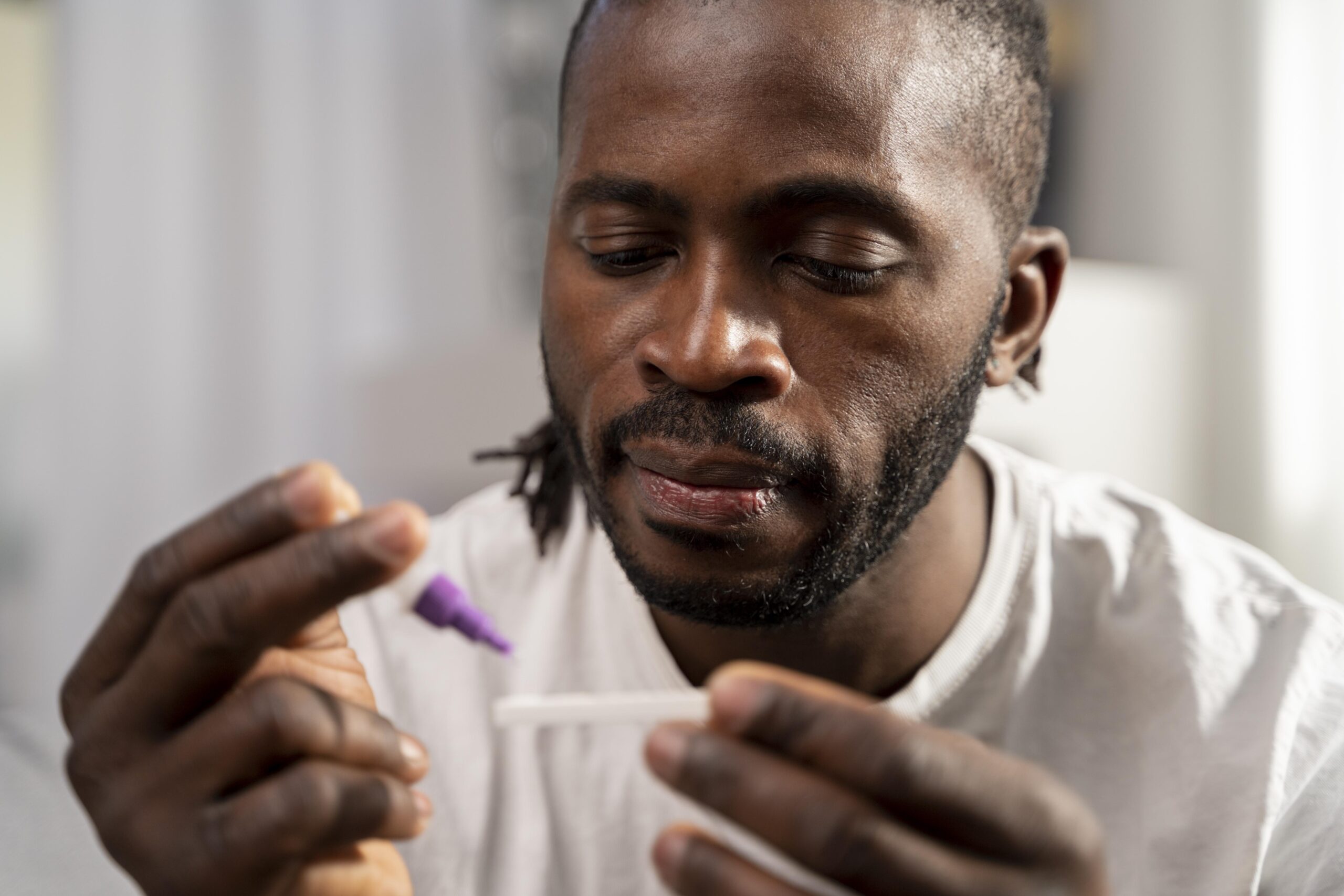
For the price of a decent dinner out, direct-to-consumer genetic testing companies promise to hand you the master key to your own biology. The pitch is pure marketing genius: spit into a plastic tube, mail it off, and unlock a hyper-personalized blueprint detailing your ancestry, your future health risks, and even how your body processes caffeine.
It feels empowering. It feels like the ultimate act of modern self-care. In reality, it is a beautifully packaged corporate hustle.
A massive percentage of the data sold to anxious, health-conscious consumers has never been rigorously validated. We have been culturally conditioned to treat DNA as an unassailable source of absolute truth, but when it comes to at-home testing kits, the results are frequently useless, and sometimes, downright dangerous.
The 40% Coin Flip: When Panic Is a Business Model
The public appetite for these high-tech crystal balls is exploding, but independent researchers who have audited these consumer genetic tests uncovered a terrifying reality: an alarmingly high false-positive rate.
Studies show that roughly 40% of the time, these tests falsely claim a customer carries a dangerous, high-risk gene variant that they simply do not have.
Think about those odds. That is nearly a 50/50 chance of receiving a life-altering, terrifying health diagnosis completely by mistake.
We aren’t talking about trivial traits here, like whether you carry the gene that makes cilantro taste like dish soap. This massive error rate applies to heavy hitters like the BRCA mutation, the breast cancer gene that famously led actress Angelina Jolie to undergo a preventive double mastectomy.
Worse still, even when these tests accurately spot a genetic variation, companies frequently misclassify completely harmless genetic typos as high-risk. Why? Because panic drives engagement. A boring, clean bill of health doesn’t make a consumer feel like their $100 investment was worth it. A frightening, catastrophic report, however, keeps the customer hooked on the platform, desperate to shell out even more money for secondary, premium testing and medical consultations.
The human cost of this corporate gaslighting is devastating. Falsely believing you are a ticking biological time bomb inflicts profound psychological trauma and, in the worst-case scenarios, drives terrified, healthy patients to request aggressive, irreversible, and entirely unnecessary surgeries.
Obesity vs. The Genetic Escape Goat
As a culture, we love to blame our DNA for our struggles because it completely absolves us of personal responsibility. If you believe you inherit a “fat gene” or a “diabetes gene,” it feels pointless to even fight it.
While genome-wide association studies have successfully linked thousands of minor genetic variations to complex illnesses, the biotech industry is hiding a dirty secret: your genetic readout barely moves the needle on predictive accuracy when compared to standard, old-school lifestyle factors.
Look at type 2 diabetes. Scientists have mapped out roughly 50 genes associated with the disease. Yet, when researchers tracked real-world outcomes, the data was brutal: an obese individual with the absolute lowest genetic risk for diabetes was still nearly five times more likely to develop the disease than a normal-weight individual with the highest genetic risk.
Telling an individual struggling with severe obesity that they have great diabetes genes is a medical disservice. It hands them a false sense of security, whispering that their daily habits don’t matter because their biological blueprint will shield them. It won’t. If you are carrying excessive body fat, you need to change your lifestyle to protect your health, regardless of what a colorful PDF report says about your chromosomes.
The Myth of “Personalized” Willpower
When critics pointed out that genetic testing lacks genuine predictive power, the industry quickly pivoted to a psychological defense. They argued that seeing your personal genetic vulnerabilities would act as a profound wake-up call, providing the exact psychological spark needed to make people hit the gym and quit eating junk food.
It was a beautiful hypothesis that completely disintegrated in the real world.
Researchers tracked individuals who paid top dollar for comprehensive genetic profiling through companies like Navigenics, businesses whose explicit mission was to “empower” people through biological insights. The results were a total wash. Even after discovering they had elevated risks for dozens of severe diseases, participants showed absolutely zero measurable changes in their diet, smoking habits, or exercise routines.
The same failure applies to the hyper-trendy world of personalized nutrition. You might think that receiving a bespoke diet plan tailored to your specific DNA would inspire you to eat your vegetables. But when put to the test, individuals given personalized genetic profiles showed no dietary improvements after three or six months compared to people given standard, universal health advice. Their weight, blood pressure, and cholesterol stayed the same. As it turns out, knowing your DNA code does not magically manufacture human willpower.
Sucking Cash Into the Sick-Care Machine
If precision medicine doesn’t accurately predict chronic disease, and it completely fails to motivate us to change our lives, why did it receive a massive presidential push and billions in federal funding?
The magic phrase is “patient empowerment.” It is a masterful political buzzword. It sounds democratic and liberating, but the reality is the exact opposite. High-tech genetic profiling actually strips away your autonomy. It transforms you from an active agent of your own health into a helpless victim dependent on a specialized class of corporate medical authorities just to interpret what you should eat for breakfast.
The hype around precision medicine persists because it perfectly serves the vested interests of an increasingly industrialized medical-scientific complex that moves trillions of dollars around the globe.
Preventative health is bad for business. If a population collectively decides to eat less sugar, cut back on ultra-processed food, and walk more, powerful agricultural and pharmaceutical empires face an existential crisis. Healthy people do not buy chronic, lifelong medications. Healthy people do not require expensive clinical care.
The United States continues to dump its healthcare budget overwhelmingly into high-tech damage control, eagerly paying to clean up lifestyle-induced disasters after they happen. The nation outspends every comparable country on Earth on healthcare, yet sits dead last in life expectancy and chronic disease management among peer nations.
All of our whiz-bang technology and million-dollar genetic sequencing cannot engineer a fix for a fundamentally toxic lifestyle.
The ultimate truth is deeply offensive to the medical-industrial complex because it is completely free: eat your broccoli, take the stairs, and stop sweating over whether a corporate algorithm says you have a 5.6% or a 7.7% lifetime risk of getting sick. Either way, living a sensible, active life is the only real health insurance policy you can buy. Everything else is just expensive noise.