
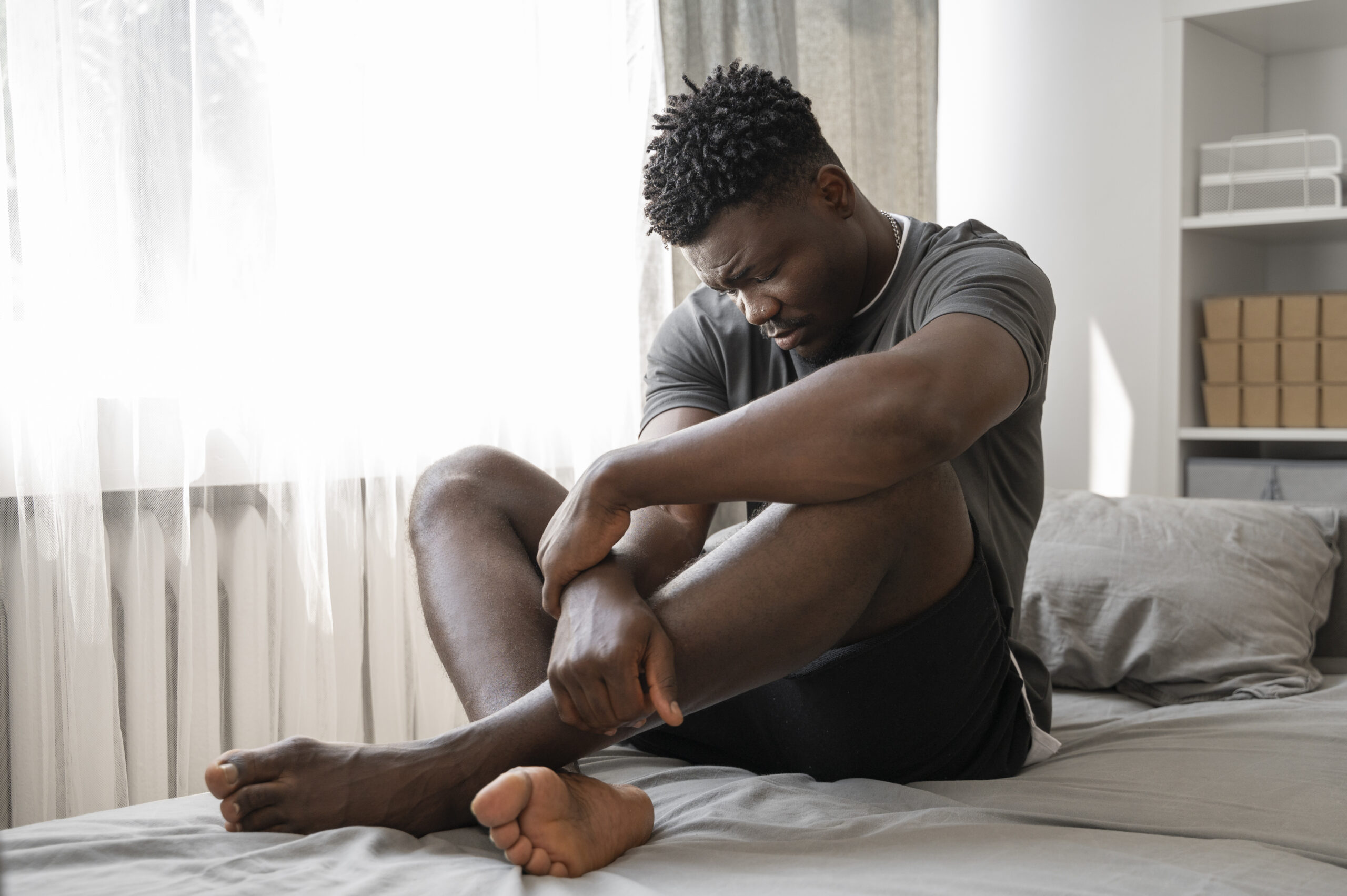
Most of us treat our legs like reliable machinery. You walk on them, sit on them, and stretch them out after a long day without giving them a second thought until suddenly, they demand your attention. It usually happens in the middle of the night: a sudden, blinding muscle spasm that jolts you awake at 2:00 AM, leaving you clutching your calf and wondering what went wrong.
When your legs start talking through cramping, heaviness, and swelling, they are speaking a language most people completely misinterpret. It isn’t just a sign of “getting older,” and it isn’t a minor inconvenience you are forced to live with. It is a direct signal that your circulatory system is actively struggling against the laws of physics.
The Gravity Problem
Your lower limbs face a circulatory challenge that your upper body never encounters: gravity. While your heart easily pumps oxygen-rich blood down to your feet through your arteries, getting that deoxygenated blood all the way back up to your chest requires serious effort.
To pull this off, the veins in your legs are lined with tiny, one-way valves designed to act as gates, trapping blood and pushing it upward with every step you take. But when these valves weaken due to prolonged sitting, weight, or age, they begin to leak. Instead of moving freely back to your heart, blood pools in your lower legs. Pressure builds, fluid leaks into the surrounding tissue, and over time, you experience afternoon heaviness, persistent swelling, and gradual skin discoloration.
During the day, constant movement and muscle contractions help force that blood upward. But when you go to sleep, your body slows down, and your circulation naturally lowers. For legs already dealing with leaky valves, this drop creates a localized crisis. Your muscles become starved of oxygen, metabolic waste accumulates in the tissues, and your leg responds the only way it knows how, with a painful night cramp.
The Downward Spiral of Fatigue
The danger of ignoring poor leg circulation is that it traps you in a destructive, downward spiral. The nighttime pain ruins your sleep, leading to daytime fatigue. Because you are exhausted, your activity levels drop the next day. And because you move less, the “calf muscle pump,” which acts as your body’s secondary heart, remains inactive, worsening your circulation the following night.
Reclaiming your energy and protecting your veins requires breaking this cycle with deliberate lifestyle adjustments. Simple habits like raising your legs above your heart for fifteen minutes, drinking enough water to keep your blood from becoming sluggish, and reducing inflammatory foods can dramatically improve your vascular health within a few weeks.
However, lifestyle changes only work if you actually have the emotional bandwidth and energy to execute them. When your body is dealing with chronic physical discomfort, it is often tied to how we handle systemic stress and tension. If you find yourself constantly too exhausted or mentally drained to focus on your physical health, it is worth examining what is keeping you stuck in these exhausting cycles. Understanding the injustice trap and why we hold onto the pain that destroys us can help clear the emotional drains that are quietly draining the energy you desperately need to take care of your body.
Frequently Asked Questions
- How serious are nighttime leg cramps? An occasional cramp happens to almost everyone. However, frequent, recurring nighttime cramps are a clear signal of underlying circulation problems that deserve a proper medical evaluation rather than being dismissed.
- Can you reverse circulation damage? Yes, you can see big improvements in just a few weeks if you stick to healthy habits. Whether you can fully reverse the damage depends on how serious it is and how long it has been there.
- Does age prevent my veins from improving? Not at all. Although age can affect your veins, healthy habits like regular movement and raising your legs can help at any age.