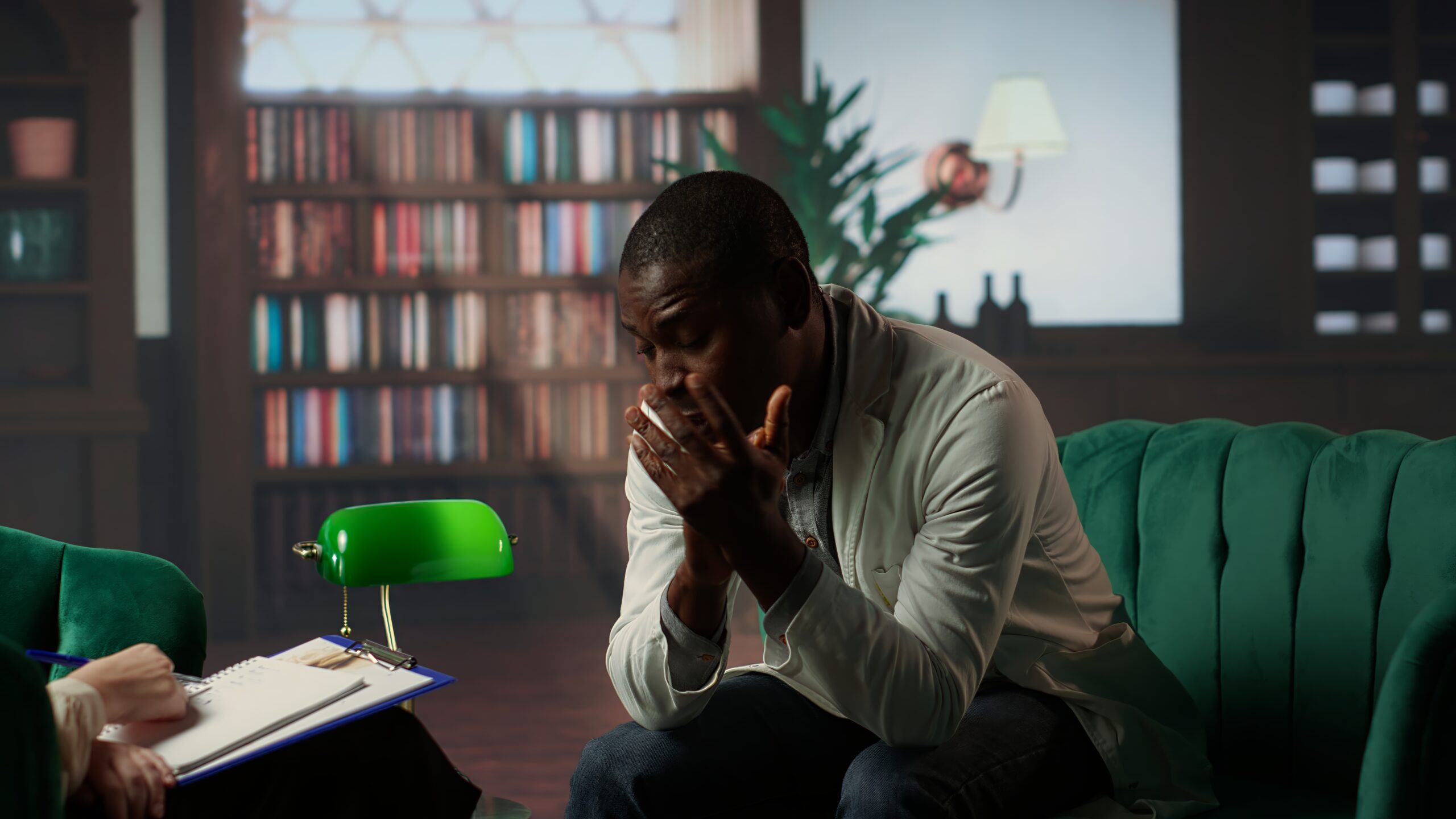

If someone walks up to you in the middle of a family dinner and shoves you into a wall, the room stops. Everyone sees it. There is an instant villain, a physical mark, and a clear reason to yell. You are allowed to be angry, and the world will back you up.
But if that same person simply looks straight through you when you speak, acts like your voice is just background noise, and passes the salt right over your hand as if you are made of air, nobody says a word. You are left standing there, feeling the blood rush to your ears, completely alone in a crowded room.
We have this incredibly stupid cultural habit of calling the silent treatment “passive.” We treat it like it’s just a lack of action, a temporary retreat, an awkward phase, or an immature way of dealing with a fight. But that is a lie.
Deliberately ignoring someone you are supposed to love isn’t passive at all. It is an active, targeted, psychological assault. And honestly, anyone who has actually lived through chronic emotional exile will tell you the exact same thing: they would have taken a physical punch to the jaw any day of the week over the agonizing, crazy-making experience of being treated like a ghost.
The Twisted Currency of Childhood Attention
The worst part about this kind of emotional starvation is how early it starts and how deeply it twists a kid’s mind. When you are the younger sibling, you don’t enter the world looking for a fight. You enter it looking for a map. You look at your older brother or sister like they are a god. They know how to talk to adults, they know what music is cool, and they move through the world with a confidence you can’t even comprehend yet. You want to be anywhere they are, doing whatever they are doing.
And when someone is that desperate for a crumb of acknowledgment, they will pay a terrifying price to get it.
Think about how far a kid will go just to feel seen for five minutes. They will literally sit on a bathroom floor and let an older sibling tie a string around their loose baby teeth, yanking them out one by one. Why? Because in those painful, bloody moments, that older sibling is finally looking right at them. They are lavishing them with focus. It is a horrific bargain to make, but to a neglected kid, physical pain is a cheap price to pay for validation.
When comparing types of cruelty, we often mistake the loud stuff for the most damaging. Loud cruelty includes outward things like being called stupid, ugly, or worthless. Because it is verbalized, your brain can at least identify it, conceptualize it, and try to fight back against it. Silent cruelty, however, is a total visual and verbal erasure. Because there is nothing to fight against, your brain internalizes it and begins to believe that you are fundamentally flawed.
When that childhood dynamic hardens into a permanent adult relationship, the rules change from bad to breaking. The older sibling might be verbally abusive, screaming insults, dragging their friends into the bullying, and making the younger one feel like an absolute idiot in front of a crowd. They might even throw a slap or a punch when they get challenged.
But our families usually sweep that stuff under the rug as “standard sibling rivalry.” You learn to dodge the physical swings. You learn to tune out the insults. What you can never learn to survive is the total, freezing darkness of being erased.
The Unspoken Script of the Family Dinner
There is a specific kind of mental torture that happens when you try to participate in a normal family life with someone who has decided you don’t exist. You walk into a room, you say a warm hello, and the other person doesn’t even blink. They don’t scowl. They don’t roll their eyes. They just keep talking to the person next to them, completely unbothered by your existence.
If you try to tell a story or ask a question, they will talk right over the top of your voice as if you didn’t emit a sound. If they are forced to look in your direction, their arms cross, their face drops into a scowl, and their eyes drift to a point about three inches past the top of your head.
The script they are running is completely loud and clear, even though they aren’t using a single word: you are an annoyance, you are completely beneath them, and you do not possess enough human value for them to waste the breath it takes to say no.
And because they are your older sibling, the person who was supposed to have your back when the rest of the world got mean, you don’t question their sanity. You question your own. You absorb that silence like a sponge absorbs dirty water. You build your entire adult self-esteem on top of the belief that your presence is an inherent burden to the people around you.
Your Brain Can’t Tell the Difference Between a Slap and a Silence
For a long time, people who complained about being ignored were told to grow a thicker skin. ‘They aren’t doing anything to you,” the advice went. Just ignore them back.
But medical science has finally caught up to what our gut instincts have known for thousands of years: your body handles social rejection exactly like a physical wound.
When neuroscientists put people inside MRI machines and simulate social exclusion, even a stupid digital game where other players stop throwing a ball to them, the brain goes into an absolute panic. The region that lights up like a Christmas tree is the anterior cingulate cortex. That is the exact same piece of brain tissue that registers the physical agony of a broken arm or a third-degree burn.
Your nervous system doesn’t understand the difference between an insult, an unanswered text, and a knife wound. It just knows that an essential line of connection has been severed, and it responds by flooding your bloodstream with cortisol and adrenaline.
The Ancestral Death Sentence
This isn’t a design flaw; it’s a survival mechanism. For ninety-nine percent of human history, if your tribe decided to stop looking at you, stop talking to you, and stop sharing the campfire with you, you didn’t just get your feelings hurt. You died. You froze to death in a ditch or you got eaten by a predator because a single human being cannot survive the wilderness alone.
Our modern brains are still running that ancient software. The progression from isolation to trauma follows a very clear biological path. It begins when you become the target of silence. This target status triggers the primitive brain, which instantly registers that tribe exile equals death. Once the brain reaches this conclusion, it initiates a chronic cortisol and adrenaline flood. Over time, this constant chemical bath forces the brain to completely restructure itself around permanent survival mode, leaving you in a state of perpetual panic and hyper-vigilance.
This is exactly why people stay in toxic relationships for decades, enduring horrific treatment just to keep a broken connection alive. A loud, screaming argument still feels like a connection to your ancient brain. It tells your nervous system, They are mad, but they still see me.
Silence, on the other hand, feels like death. It sends your body into a permanent state of hyper-vigilance, destroying your ability to regulate your emotions, sleep through the night, or trust the people who actually want to love you.
Starving in Plain Sight
Growing up in this kind of emotional drought actually changes the physical architecture of a child’s brain. Harvard’s research on childhood neglect shows that when a caregiver or a primary family member consistently refuses to respond to a child’s bids for connection, the brain stops building the pathways for trust and emotional safety. It builds concrete highways around the expectation of being invisible.
You carry that structural damage straight into adulthood. You become the partner who constantly asks, Are we okay? because an hour of quiet feels like an impending abandonment. You build massive, defensive walls around your heart because your body remembers that opening up to people is exactly how you get starved out.
Walking away from a relationship like that is rarely an easy, cinematic moment of triumph. It is a slow, painful process of realizing that you have been starving to death in plain sight, trying to maintain the outward appearance of a normal family while your soul is being picked clean.
The moment you finally decide to drop the rope and stop begging for their attention, something heavy drops out of your chest. It feels like a dislocated bone finally sliding back into its proper socket. It still throbs, and the bruises will take years to fade, but for the first time in your life, you aren’t fighting for oxygen in a room where someone else is sucking it all out.
The silence was never your fault. You were never invisible; you were just trying to be seen by someone who was completely blind to your worth. Give up on the tribe that left you out in the cold, and go build a fire with people who actually look up when you walk through the door.